Request a Windows hardware rescan.
- Runs locally on the Windows computer
- Offers a visible button and keyboard shortcut
- Reports whether Windows accepted the request
- Keeps source available under the MIT License
Free Windows utility · MIT licensed
Bluetooth Refresh gives Windows a simple request: scan for hardware changes again. Use the button when an adapter or nearby-device change has not appeared yet, or remember the gloriously excessive shortcut.
Version 1.0 is unsigned. Windows or Microsoft Defender SmartScreen may show a warning because the app does not yet have a paid code-signing certificate. Inspect the MIT-licensed source and verify the published SHA-256 checksum before running it. Do not bypass a warning you cannot independently verify.
Free forever. Windows 10 version 2004 or later, or Windows 11, on x64 computers. No telemetry, network requests, driver installation, or Windows service resets.
Public source and release are live. Inspect the repository or open the v1.0.0 release, notes, and assets.
One click. No mystery service resets.
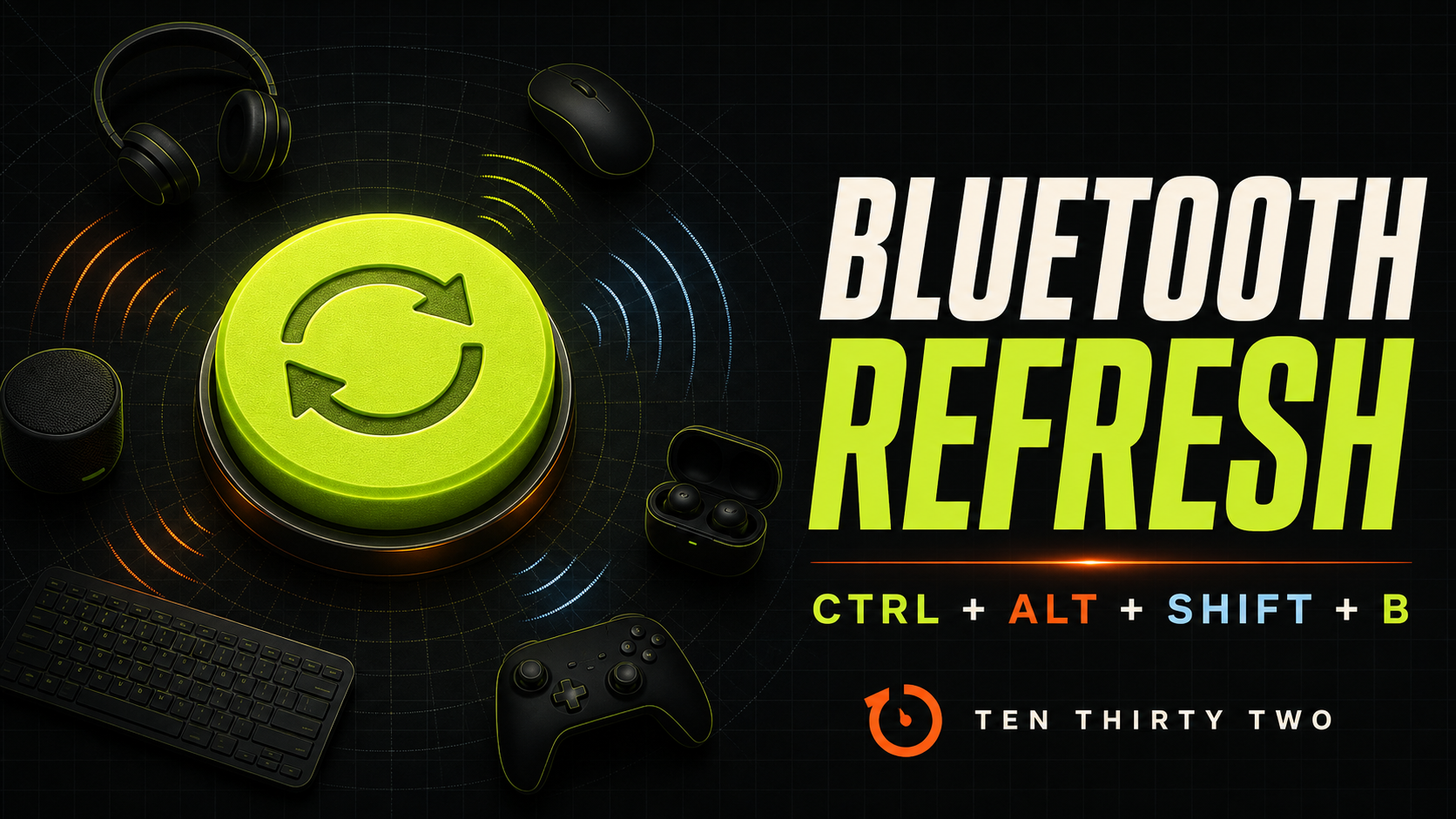
One button, one job
Windows already knows how to scan for hardware changes. Bluetooth Refresh makes that request accessible without sending you through layers of Device Manager menus.
Request a fresh scan for hardware changes using Windows’ built-in pnputil /scan-devices command.
The utility tells you whether Windows accepted the rescan request. It does not pretend a scan repaired the underlying problem.
No account, analytics, background network connection, automatic pairing, or hidden service restart.
The shortcut you will not forget
Keep Bluetooth Refresh running, then press the four-key shortcut to request the same Windows hardware scan without reaching for the button.
Why so strange? Common key combinations already belong to browsers, Windows, and other apps. This deliberately odd combination is easier to remember than a menu path and less likely to collide. It works only while Bluetooth Refresh is running and may be unavailable if another app has already claimed it.
Honest boundaries
Use Bluetooth Refresh when Windows may need to notice a hardware-state change. Use the right Windows, driver, browser, or manufacturer tools for everything else.
Using Bluetooth from a website? A Windows rescan cannot add Web Bluetooth support to a browser or grant a site permission. Your browser, operating system, adapter, device, and security settings must all support the connection.
Use it in under a minute
Save the Windows x64 ZIP, then extract it to a folder you control.
Version 1.0 is unsigned, so Windows or SmartScreen may warn. Inspect the public source and compare the ZIP with the published SHA-256 checksum. Do not bypass a warning you cannot independently verify.
Open Bluetooth Refresh and choose Refresh Bluetooth, or keep it running and press Ctrl+Alt+Shift+B.
If the device still does not appear, check pairing mode, distance, batteries, Windows permissions, drivers, and manufacturer guidance.
Before you click
The utility requests a hardware rescan; it does not intentionally unpair devices or restart Bluetooth services. Windows and individual devices can still change state independently, so save important work before troubleshooting any hardware connection.
No. It may help Windows notice hardware that is already supported, but it does not install, update, or repair drivers. Use Windows Update or the computer or adapter manufacturer’s verified support page for drivers.
No. Bluetooth Refresh has no telemetry and makes no network requests. The public source lets anyone inspect what it does.
Yes. Bluetooth Refresh is released under the MIT License. Review the license in the public repository for the short set of conditions that applies.
A small useful thing, given away
Bluetooth Refresh is a free Windows utility from Ten Thirty Two. Keep it, inspect it, change it, or share it under the MIT License.